

Tianni Law Firm helps foreign businesses and individuals navigate Chinese law with confidence — from supplier disputes and shipping claims to contracts, IP and cross-border transactions.
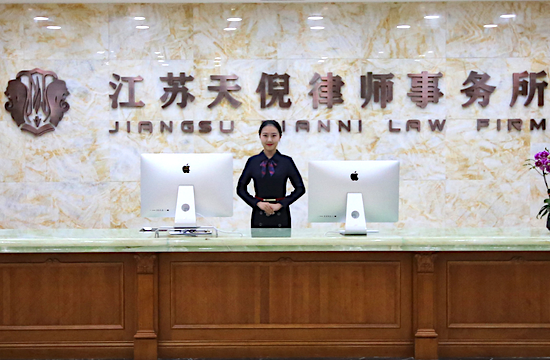
Tianni Law Firm is a large comprehensive law firm in mainland China, with more than 100 lawyers and staff providing high-quality legal services to clients worldwide.
We resolve our clients' legal issues across eight core areas, with specialist teams for every matter involving China.
Resolve clients' legal issues through negotiation, litigation, arbitration and more.
Cross-border exchange of goods and services, adhering to global regulations.
Help clients deal with disputes arising from international cargo transportation.
Protect inventions, trademarks, and copyrights, ensuring your legal rights.
Due diligence, business negotiation, and project design & implementation.
Expert advice to help clients navigate laws and make informed decisions.
International divorce, inheritance disputes, and family trust establishment.
Defend individuals accused of crimes, ensuring their legal rights are protected.
We have handled hundreds of foreign-related cases of every type, with 20 years of professional experience and no complaints.
We provide the best solution and multiple payment methods — including contingency fees for eligible cases — to save you cost.
Efficient delivery of legal services with professional analysis at every stage, helping you capture maximum benefit.
Our foreign-related team advises in Chinese and English, bridging the gap between international business and Chinese law.
A highly skilled, diverse team with deep knowledge of global regulations, cross-border transactions and dispute resolution.
Practical guidance on doing business with China, written by our lawyers.
The 2025 Anti-Unfair Competition Law moves false commercial publicity to Article 9, the Advertising Law's absolute terms and false-advertising rules, the Consumer Protection Law's punitive-damages exposure, and why the exchanges' sustainability-reporting guidelines are self-regulatory rather than a greenwashing offence.

The administrative-first structure of invalidation, the novelty, inventiveness, disclosure and good-faith grounds under Articles 22, 26 and 20, the two-step appeal route to the Beijing IP Court and the Supreme People's Court IP Tribunal, and how to run invalidation alongside infringement.

The assembled Civil Code framework (Articles 1165, 1194–1197 and 1202), the generative-AI and algorithmic-recommendation duties that shape fault, the 2025 labelling rules, PIPL Article 24 on automated decisions, and why no fault presumption applies.
Get your first consultation free. Speak directly with a lawyer who understands both Chinese law and international business.